Woodworking Complete Beginner Budget Guide (2026)
Many aspiring woodworkers never pick up their first saw because they believe woodworking is an expensive hobby that requires hundreds or even thousands of dollars in tools, equipment, and workshop space. This misconception stops countless beginners before they even attempt their first project, robbing them of a rewarding, practical, and potentially profitable skill.
The truth is far more encouraging: you can start woodworking on a surprisingly small budget if you focus exclusively on essentials and avoid the common trap of unnecessary purchases that plague most beginners. You don’t need a garage full of power tools, a professional workbench, or expensive hardwoods to create beautiful, functional projects.
In this comprehensive budget guide, you’ll discover the absolute cheapest way to start woodworking, learn exactly which tools you actually need (and which ones are just marketing hype), understand what you can safely skip or postpone, find out where to source affordable materials and equipment, and learn how to build your first projects without overspending or compromising on quality.
Whether you’re working with a $100 budget or $200, this guide will show you how to maximize every dollar and start building real woodworking skills immediately.
Quick Answer
The cheapest way to start woodworking is to invest in basic hand tools, purchase affordable softwood lumber like pine or poplar, and begin with simple beginner-friendly projects that teach fundamental skills. Most beginners can successfully start woodworking for under $150 by purchasing only essential tools and completely avoiding large machines, expensive hardwoods, and unnecessary accessories. This budget-conscious approach not only saves money but actually accelerates skill development by forcing you to focus on technique rather than relying on expensive equipment.
Minimum Tools You Need (Budget Starter Kit Under $150)
The biggest mistake beginners make is thinking they need a fully equipped workshop before starting. You don’t. In fact, you only need seven basic tools to begin learning real woodworking skills and completing actual projects.
Essential Starter Tools (Total Cost: $100-150)
1. Tape Measure (25-foot)
- Cost: $8-15
- Why you need it: Accurate measurements are the foundation of every project
- Budget tip: Any brand works fine; avoid expensive auto-lock features initially
- What to look for: Clear markings, sturdy case, basic locking mechanism
2. Carpenter’s Pencil or Mechanical Pencil
- Cost: $2-5
- Why you need it: Marking cut lines and measurements precisely
- Budget tip: Carpenter’s pencils are cheaper and don’t roll off surfaces
- What to look for: Dark, visible marks; easy to sharpen or refill
3. Handsaw (Crosscut or Japanese Pull Saw)
- Cost: $12-25
- Why you need it: Your primary cutting tool for all projects
- Budget tip: Japanese pull saws cut easier and cost less than premium Western saws
- What to look for: Sharp teeth, comfortable handle, 12-16 inch blade length
4. Cordless Drill or Budget Corded Drill
- Cost: $35-60
- Why you need it: Drilling pilot holes and driving screws efficiently
- Budget tip: Corded drills cost half as much as cordless and work just as well
- What to look for: Variable speed, 3/8″ chuck minimum, comfortable grip
5. Sandpaper (Assorted Grits)
- Cost: $8-12
- Why you need it: Smoothing surfaces and preparing wood for finishing
- Budget tip: Buy multi-packs with 80, 120, and 220 grit
- What to look for: Variety pack with at least three different grits
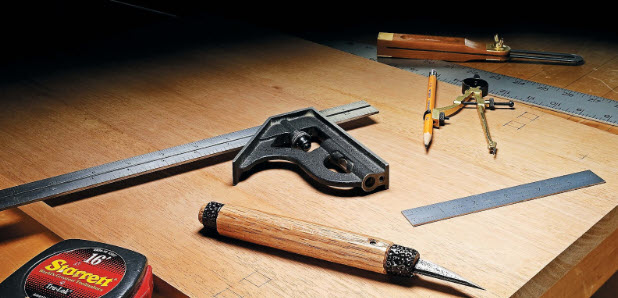
6. Combination Square (6-inch or 12-inch)
- Cost: $12-20
- Why you need it: Checking right angles and marking perpendicular lines
- Budget tip: A basic model works perfectly; avoid expensive digital versions
- What to look for: Clear markings, tight-fitting blade, metal construction
7. Clamps (2-4 Bar Clamps or Quick-Grip Clamps)
- Cost: $20-35
- Why you need it: Holding pieces together while glue dries or when assembling
- Budget tip: Start with two 12-inch clamps; add more as needed
- What to look for: Adequate clamping pressure, comfortable handles, rust-resistant
Total Essential Kit Cost: $97-172
These seven tools enable you to complete dozens of beginner and intermediate projects. Everything else is optional or can be added later as your skills develop and specific project needs arise.
Critical Beginner Tip: Skills matter infinitely more than tools. A $20 handsaw in skilled hands produces better results than a $500 power saw used by someone who doesn’t understand proper technique. Expensive equipment won’t make you a better woodworker — deliberate practice will.
Optional But Helpful Additions (Add These Second)
Once you’ve mastered the basics with your essential kit, consider these affordable additions:
- Chisel set (3-piece): $15-25 — for cleaning joints and detail work
- Block plane: $20-35 — for smoothing edges and fitting joints
- Safety glasses: $8-12 — essential for eye protection
- Dust mask: $10-15 — protect your lungs from sawdust
- Wood glue (8 oz): $5-8 — stronger joints and better assemblies
Cheapest Places to Buy Woodworking Tools (Save 40-70%)
You absolutely do not have to buy brand-new professional-grade tools. Some of the best woodworkers started with secondhand equipment and gradually upgraded as their skills and budgets allowed.
Best Budget Sources for Tools
1. Discount Tool Stores (Harbor Freight, Northern Tool)
- Savings: 30-50% compared to name brands
- Best for: Hand tools, clamps, safety equipment, measuring tools
- What to buy: Tape measures, squares, clamps, safety glasses, basic hand tools
- What to avoid: Power tools with motors (quality issues common)
- Pro tip: Check their coupon database online before shopping
2. Online Marketplaces (Facebook Marketplace, Craigslist, OfferUp)
- Savings: 50-70% off retail prices
- Best for: Used power tools, hand tools, workbenches, lumber
- What to buy: Drills, saws, clamps, measuring tools from reputable brands
- What to avoid: Tools with obvious damage, missing parts, or no way to test
- Pro tip: Search terms like “moving sale,” “estate sale,” or “garage cleanout” for best deals
3. Garage Sales and Estate Sales
- Savings: 60-80% off retail prices
- Best for: Vintage hand tools, complete tool sets, workshop equipment
- What to buy: Hand saws, planes, chisels, squares, clamps
- What to avoid: Rusty tools beyond restoration, incomplete sets
- Pro tip: Arrive early for best selection; bring cash for negotiating
4. Pawn Shops
- Savings: 40-60% off retail prices
- Best for: Power tools, complete tool sets, brand-name equipment
- What to buy: Drills, circular saws, sanders from known brands
- What to avoid: Tools without power cords or missing accessories
- Pro tip: Visit regularly as inventory changes frequently; negotiate prices
5. Big Box Store Clearance Sections (Home Depot, Lowe’s)
- Savings: 30-50% off regular prices
- Best for: Discontinued models, returned items, seasonal clearance
- What to buy: Power tools, hand tools, safety equipment, storage
- What to avoid: Items marked “as-is” without testing first
- Pro tip: Check clearance aisles weekly; ask staff when markdowns happen
6. Online Retailers (Amazon, eBay) During Sales
- Savings: 25-40% during major sales events
- Best for: New tools with warranties, bulk purchases, specific brands
- What to buy: Tool sets, clamps in bulk, safety equipment
- What to avoid: Unknown brands with no reviews
- Pro tip: Use price tracking tools; buy during Black Friday, Prime Day, or holiday sales
7. Tool Rental Centers (Buying Used Rental Equipment)
- Savings: 40-60% off retail for well-maintained tools
- Best for: Power tools that have been professionally maintained
- What to buy: Drills, sanders, saws from rental fleet sales
- What to avoid: Tools with excessive wear or damage
- Pro tip: Ask when they sell off old rental inventory
Money-Saving Shopping Strategies
Before You Buy Anything:
- Make a list of tools needed for your specific first project
- Research average prices online to recognize good deals
- Check tool reviews to avoid known problem models
- Set a firm budget and stick to it
When Buying Used Tools:
- Test power tools before purchasing (bring extension cord)
- Check for rust, cracks, missing parts, or excessive wear
- Verify moving parts work smoothly
- Ask about the tool’s history and why they’re selling
- Negotiate prices (most sellers expect this)
Quality Indicators for Used Tools:
- Reputable brand names (DeWalt, Makita, Bosch, Stanley, Irwin)
- Minimal rust or corrosion
- All original parts present
- Smooth operation without unusual noises
- Clear, readable markings and measurements
Many experienced woodworkers proudly use tools they purchased secondhand decades ago. Quality tools last for generations when properly maintained.
Best Cheap Wood for Beginners (l Costs Matter)
Tool costs are only half the equation. The wood you choose dramatically impacts your total startup costs and your success rate as a beginner.
Affordable Beginner-Friendly Woods
1. Pine (White Pine or Yellow Pine)
- Cost: $2-5 per board foot
- Why it’s perfect for beginners: Cheapest option, extremely soft and easy to cut, widely available at every hardware store
- Best uses: Practice projects, shelving, boxes, outdoor furniture (when sealed)
- Characteristics: Soft, lightweight, straight grain, many knots
- Drawback: Dents easily, knots can be problematic
- Where to buy: Any home improvement store, lumber yard
2. Poplar
- Cost: $3-6 per board foot
- Why it’s perfect for beginners: Smooth grain, minimal knots, takes paint beautifully, stronger than pine
- Best uses: Painted furniture, cabinets, indoor projects, practice pieces
- Characteristics: Medium density, consistent color, easy to work
- Drawback: Greenish undertones make it poor for staining
- Where to buy: Home improvement stores, lumber yards
3. Construction Lumber (Framing Lumber)
- Cost: $1-3 per board foot
- Why it’s perfect for beginners: Absolute cheapest option, perfect for learning and practice
- Best uses: Practice cuts, rough projects, outdoor builds, workbenches
- Characteristics: Rough surface, many defects, inconsistent quality
- Drawback: Requires more sanding, not suitable for fine furniture
- Where to buy: Home improvement stores (in framing lumber section)
4. Spruce
- Cost: $2-4 per board foot
- Why it’s perfect for beginners: Lightweight, easy to cut, affordable
- Best uses: Indoor projects, shelving, boxes, learning projects
- Characteristics: Light color, straight grain, minimal knots
- Drawback: Not very durable for heavy-use items
- Where to buy: Lumber yards, home improvement stores
Woods to Avoid Initially (Save These for Later)
Expensive Hardwoods That Waste Beginner Budgets:
1. Walnut
- Cost: $12-20 per board foot
- Why to avoid: Extremely expensive, too costly for practice and learning
- When to use: Special projects after you’ve developed skills
2. Oak (Red or White)
- Cost: $8-15 per board foot
- Why to avoid: Very hard to cut with hand tools, expensive, requires sharp blades
- When to use: Furniture projects after 6-12 months of experience
3. Maple (Hard Maple)
- Cost: $8-12 per board foot
- Why to avoid: Extremely dense, dulls blades quickly, difficult for beginners
- When to use: Cutting boards and furniture after gaining experience
4. Cherry
- Cost: $10-16 per board foot
- Why to avoid: Expensive, can be difficult to work with, changes color over time
- When to use: Fine furniture after mastering fundamentals
5. Exotic Hardwoods (Teak, Mahogany, Purpleheart)
- Cost: $15-30+ per board foot
- Why to avoid: Prohibitively expensive, often require special handling
- When to use: Very special projects with advanced skills
Wood Buying Tips for Maximum Savings
Where to Find Cheap Wood:
- Home improvement store cull bins: Discounted boards with minor defects (30-50% off)
- Lumber yard cutoff bins: Short pieces perfect for small projects (50-70% off)
- Craigslist/Facebook Marketplace: People giving away or selling cheap lumber
- Pallet wood: Free if you disassemble pallets (requires more work)
- Construction sites: Ask contractors for scrap wood (often free)
How to Select Budget Lumber:
- Look through the entire stack for the straightest boards
- Avoid boards with large cracks, excessive warping, or loose knots
- Buy slightly longer boards and cut around defects
- Check moisture content (should feel dry, not damp)
- Sight down the length to check for twisting or cupping
Cost Comparison for First Project:
- Pine shelf (1×8, 6 feet): $8-12
- Poplar shelf (1×8, 6 feet): $15-20
- Oak shelf (1×8, 6 feet): $35-50
- Walnut shelf (1×8, 6 feet): $60-90
Starting with pine or poplar saves you $40-80 per project while you’re learning. Those savings add up quickly.
Pro Tips for Saving Money on Woodworking
Follow these proven strategies, and your startup costs will drop dramatically while your skill development accelerates.
Money-Saving Strategies That Work
1. Practice All Cuts on Scrap Wood First
- Savings: $50-100 per project in wasted materials
- How: Keep a scrap bin, test every cut and technique before using project wood
- Why it works: Mistakes on scrap are free; mistakes on project wood are expensive
2. Borrow Tools When Possible
- Savings: $100-500 in tool purchases
- How: Ask friends, family, neighbors, or join tool libraries
- Why it works: Try before you buy, avoid purchasing rarely-used tools
3. Buy Tools Only When Needed for Current Project
- Savings: $300-800 in premature purchases
- How: Make a project-specific tool list, purchase only missing items
- Why it works: Ensures every tool purchase has immediate practical value
4. Start with Hand Tools, Add Power Tools Gradually
- Savings: $400-1,000 in initial costs
- How: Master hand tool techniques first, add power tools as skills develop
- Why it works: Hand tools are cheaper, teach better technique, require less space
5. Upgrade Slowly and Strategically
- Savings: $500-1,500 over first year
- How: Replace tools only when they become the limiting factor in your work
- Why it works: Ensures upgrades are necessary, not impulsive
6. Use Free or Cheap Scrap Wood for Practice
- Savings: $100-200 in practice materials
- How: Collect construction site scraps, pallet wood, Craigslist free listings
- Why it works: Perfect for learning without financial pressure
7. Join Online Woodworking Communities
- Savings: Priceless knowledge, avoid expensive mistakes
- How: Reddit r/woodworking, Facebook groups, forums
- Why it works: Learn from others’ mistakes, get free advice, find deals
8. Watch Free Tutorials Before Starting Projects
- Savings: $50-150 per project in mistakes avoided
- How: YouTube, free woodworking blogs, library books
- Why it works: Visual learning prevents costly errors
9. Buy Consumables in Bulk
- Savings: 30-50% on sandpaper, glue, screws
- How: Purchase larger quantities when on sale
- Why it works: Lower per-unit cost, always have supplies on hand
10. Maintain Your Tools Properly
- Savings: $100-300 in replacement costs
- How: Clean after use, sharpen regularly, store properly
- Why it works: Tools last decades when properly maintained
Slow, strategic upgrading is the secret approach experienced woodworkers use. They didn’t start with full workshops — they built their tool collections over years, purchasing only what they needed when they needed it.
Budget Comparison: Different Starting Approaches
Understanding the cost and learning implications of different starting strategies helps you make informed decisions.
Startup Approach Comparison
| Approach | Initial Cost | Tool Quality | Skill Growth Rate | Recommended | Long-term Value |
|---|---|---|---|---|---|
|
Ultra-Budget Start (hand tools only)
|
$75-100
|
Basic
|
Very Fast
|
✔ Best for tight budgets
|
Excellent foundation
|
|
Budget Start (hand tools + basic drill)
|
$100-150
|
Good
|
Fast
|
✔ Best overall choice
|
Strong foundation
|
|
Mid-Range Start (some power tools)
|
$300-500
|
Better
|
Medium
|
Later stage
|
Good if budget allows
|
|
Full Workshop (all power tools)
|
$1,500-3,000+
|
Varies
|
Slow
|
✘ Not recommended
|
Poor for beginners
|
|
Premium Tools (high-end everything)
|
$2,000-5,000+
|
Excellent
|
Very Slow
|
✘ Wasteful
|
Unnecessary initially
|
Why Budget Starts Produce Faster Skill Growth
Counterintuitive Truth: Starting cheap actually helps you learn faster because:
- Focus on Technique: Without power tools, you must learn proper hand tool technique
- Understand Wood Behavior: Hand tools give you better feel for wood grain and characteristics
- Develop Patience: Slower processes teach careful, deliberate work habits
- Build Problem-Solving Skills: Limited tools force creative solutions
- Appreciate Upgrades: You’ll know exactly what improvements matter when you do upgrade
Real-World Example:
- Beginner A (budget start): Spends $120, builds 5 projects in 3 months, develops solid fundamentals
- Beginner B (full workshop): Spends $2,000, builds 2 projects in 3 months, relies on tools instead of technique
Beginner A becomes a better woodworker faster despite (or because of) the limited budget.
Frequently Asked Questions About Budget Woodworking
Can I start woodworking with just $100?
Yes, absolutely. Many beginners start successfully with $100-150 worth of basic tools. A minimal kit including a handsaw ($15), tape measure ($10), square ($12), drill ($40), sandpaper ($8), and clamps ($20) totals around $105. This kit enables you to complete dozens of beginner projects. Add another $10-20 for your first project’s wood, and you’re building real projects for $115-125 total.
Is cheap woodworking equipment worth it for beginners?
Yes, budget tools are perfectly fine while you’re learning fundamentals. The difference between a $15 handsaw and a $60 handsaw matters far less than proper technique. Budget tools from reputable discount brands (Harbor Freight, Ryobi, Craftsman) work well for beginners. Once you’ve developed skills and know what features matter to you, then invest in premium tools. Starting cheap prevents wasting money on expensive tools you might not use.
Should I buy used tools or new tools?
Absolutely buy used tools when possible. Used tools from quality brands (DeWalt, Makita, Stanley, Irwin) often perform identically to new tools at 50-70% savings. Check Facebook Marketplace, Craigslist, garage sales, and pawn shops. Test power tools before buying, inspect hand tools for damage, and verify all parts are present. Many woodworkers use tools purchased secondhand decades ago. The only exceptions: buy new safety equipment (glasses, masks) and consumables (sandpaper, blades).
Do I need power tools to begin woodworking?
No, you don’t need power tools to start. Hand tools are perfect for learning and cost significantly less. Traditional woodworkers create beautiful furniture using only hand tools. Hand tool woodworking teaches better technique, requires less space, produces less dust and noise, and costs a fraction of power tool setups. A handsaw, hand drill (brace and bit), and hand plane can accomplish almost anything power tools can — just more slowly. Add power tools gradually as your skills and budget grow.
How long until I need to upgrade my budget tools?
Most beginners can use budget tools successfully for 6-12 months or 15-25 projects before needing upgrades. Upgrade individual tools only when they become the limiting factor in your work — when you notice the tool’s limitations preventing you from achieving your desired results. Signs you’re ready to upgrade: frequent blade replacements, inconsistent cuts, tool breakage, or when you’re working on projects where tool precision matters significantly.
What’s the absolute minimum I can spend and still learn woodworking?
The absolute minimum is around $75-80 if you’re extremely budget-conscious: handsaw ($12), tape measure ($8), pencil ($2), sandpaper ($8), 2 clamps ($15), square ($12), and scrap wood (free). This ultra-minimal kit teaches fundamental skills. However, adding a basic drill ($35-40) for $110-120 total dramatically expands your project possibilities and is highly recommended.
Can I make money woodworking with budget tools?
Yes, many woodworkers started selling simple projects made with budget tools. Items like cutting boards, shelves, boxes, and small furniture can be profitable even when made with basic equipment. Focus on design, craftsmanship, and finishing quality rather than complex joinery requiring expensive tools. As you earn money from projects, reinvest in better tools. Many successful woodworking businesses started this way.
Final Verdict: Your Budget Woodworking Action Plan
The cheapest way to start woodworking is refreshingly simple: keep everything minimal, focus on essentials, and build skills before building your tool collection. You don’t need a workshop, expensive machines, or professional-grade equipment to begin creating real, functional, beautiful projects.
Your Budget Woodworking Roadmap:
Month 1 ($100-150 investment):
- Purchase essential 7-tool starter kit
- Buy pine or poplar for first project
- Build 2-3 simple projects (box, shelf, organizer)
- Practice fundamental skills on scrap wood
Month 2-3 ($20-40 additional):
- Complete 3-4 more projects with existing tools
- Add safety equipment if not included initially
- Experiment with different wood types
- Join online woodworking communities
Month 4-6 ($50-100 additional):
- Add 1-2 tools based on project needs (jigsaw, circular saw, or router)
- Attempt slightly more complex projects
- Start finishing projects with stain or paint
- Consider selling simple items
Month 7-12 ($100-200 additional):
- Upgrade most-used tools to better quality
- Add specialized tools for specific techniques
- Build intermediate-level furniture
- Develop your personal woodworking style
Total First-Year Investment: $270-490 (compared to $2,000-5,000 for immediate full workshop setup)
Most beginners can start woodworking for under $150 and upgrade gradually as their skills improve, project complexity increases, and they identify specific tool needs. This approach saves money, accelerates learning, and ensures every tool purchase has practical value.
The Bottom Line: Your first projects won’t be perfect, and that’s exactly the point. Budget tools and cheap wood give you permission to make mistakes, experiment, and learn without financial stress. As your skills develop, you’ll naturally identify which tools deserve upgrades and which techniques you want to pursue further.
Start small, start cheap, and start today. The best woodworkers didn’t begin with perfect workshops — they began with basic tools and the willingness to learn.
What to Read Next: Continue Your Budget Woodworking Journey
To continue developing your woodworking skills while maintaining your budget-conscious approach, explore these helpful resources next:
Immediate Next Steps:
- Complete Beginner Tool Buying Guide: Detailed reviews of specific budget-friendly tool brands and models
- 10 Easy Weekend Woodworking Projects Under $20: Step-by-step plans for simple, affordable builds
- Small Workspace Setup Ideas: Maximize limited space for woodworking in apartments and small homes
- How to Find Free or Cheap Wood: Sources for scrap lumber, reclaimed wood, and budget materials
- Basic Woodworking Techniques: Master fundamental skills with minimal tool investment
Each step builds your skills, confidence, and tool collection without breaking your budget. Remember: every master woodworker started with basic tools and simple projects. Your journey begins with that first cut, not with a perfect workshop.