Woodworking For Beginners: The Ultimate Step-by-Step Starter Guide
Starting your woodworking journey can feel incredibly overwhelming, especially when you’re bombarded with conflicting advice about which tools to buy, what type of wood to use, or where to even begin your first project. Many aspiring woodworkers waste hundreds of dollars on the wrong equipment or give up entirely within the first few months because they make simple, avoidable mistakes that derail their confidence.
The truth is, woodworking doesn’t have to be complicated or expensive to start. You don’t need a garage full of power tools or years of experience to create beautiful, functional pieces.
In this comprehensive beginner guide, you’ll learn exactly how to start woodworking step-by-step, discover what tools you actually need (and which ones are just marketing hype), understand what mistakes to avoid, and gain the confidence to build your first project successfully — even if you have absolutely zero experience and have never picked up a saw in your life.
Whether you’re looking to build furniture for your home, create handmade gifts, start a side business, or simply enjoy a rewarding hands-on hobby, this guide will give you the foundation you need to succeed.
Quick Answer
The easiest and most cost-effective way to start woodworking is to begin with basic hand tools, inexpensive softwood lumber, and simple beginner-friendly projects. Focus on learning fundamental skills like accurate measuring, straight cutting, and proper sanding techniques before investing in expensive power tools or attempting complex furniture builds. This approach saves money, builds confidence, and establishes the proper techniques that will serve you throughout your entire woodworking journey.
What Is Woodworking? Understanding the Craft
Woodworking is the timeless skill and art of creating functional or decorative items from wood using various tools to cut, shape, join, and finish pieces. This craft encompasses everything from simple DIY shelves and picture frames to intricate furniture, cabinetry, wood turning, carving, and architectural woodwork.
For beginners, woodworking is best approached as a progressive skill-building hobby rather than a race to build complicated projects. The craft has been practiced for thousands of years, and while modern tools have made certain tasks easier, the fundamental principles remain unchanged: understanding wood grain, making precise measurements, creating clean cuts, and assembling pieces with proper joinery.
Why Woodworking Is Worth Learning:
- Practical Skills: Create custom furniture and home improvements tailored to your exact needs
- Cost Savings: Build items for a fraction of retail prices once you develop basic skills
- Creative Outlet: Express your creativity through design and craftsmanship
- Mental Health Benefits: Woodworking provides stress relief and a sense of accomplishment
- Potential Income: Many hobbyists eventually sell their creations or take on custom projects
- Sustainable Living: Repair and restore items instead of replacing them
The beauty of woodworking is that you can start at any age, with any budget, and in almost any living situation. You don’t need a dedicated workshop to begin — many successful woodworkers started in apartments, garages, or even on balconies.
Essential Tools You Actually Need to Start Woodworking
One of the biggest mistakes beginners make is thinking they need a fully equipped workshop before starting. This misconception stops many people before they even begin. The reality is far simpler: you only need a handful of essential tools to complete your first dozen projects.
Starter Tool List (Under $150 Total)
1. Measuring Tape (25-foot recommended)
- Essential for all projects
- Look for one with a locking mechanism
- Cost: $10-20
2. Carpenter’s Pencil or Mechanical Pencil
- Marking cut lines and measurements
- Carpenter’s pencils don’t roll off surfaces
- Cost: $2-5
3. Handsaw (Crosscut or Japanese Pull Saw)
- Your primary cutting tool initially
- Japanese pull saws are easier for beginners
- Cost: $15-30
4. Cordless Drill/Driver
- Drilling pilot holes and driving screws
- 12V or 18V models work well
- Cost: $50-80
5. Sandpaper (Various Grits: 80, 120, 220)
- Smoothing surfaces and edges
- Start with hand sanding before buying power sanders
- Cost: $10-15
6. Clamps (At least 4)
- Holding pieces while glue dries
- Bar clamps or quick-grip clamps recommended
- Cost: $30-50 for a set
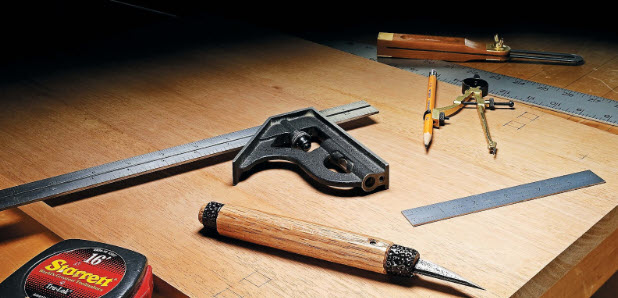
7. Combination Square
- Checking right angles and marking
- More versatile than a basic square
- Cost: $15-25
Optional but Helpful Early Additions:
- Chisel set (for cleaning joints): $20-30
- Block plane (for smoothing edges): $25-40
- Safety glasses: $10-15
- Hearing protection: $15-20
- Dust mask or respirator: $15-30
These tools will allow you to complete your first 10–15 projects without investing in expensive machinery. As your skills develop and you identify specific needs, you can gradually add power tools like circular saws, jigsaws, or routers.
Beginner Rule: Start small and upgrade tools only when your current tools become the limiting factor in your projects, not before.
Best Wood Types for Beginners: What to Buy and What to Avoid
Not all wood is created equal, especially when you’re just learning. Some species are significantly easier to work with, more forgiving of mistakes, and much more affordable — making them perfect for beginners.
Best Beginner-Friendly Woods
1. Pine
- Why it’s great: Extremely affordable, widely available at any hardware store, very soft and easy to cut
- Best for: Practice projects, shelving, boxes, outdoor furniture (when treated)
- Cost: $3-6 per board foot
- Drawback: Dents easily, can have many knots
2. Poplar
- Why it’s great: Smooth grain, minimal knots, takes paint beautifully, stronger than pine
- Best for: Painted furniture, cabinets, indoor projects
- Cost: $4-7 per board foot
- Drawback: Not ideal for staining (greenish undertones)
3. Cedar
- Why it’s great: Naturally rot-resistant, pleasant aroma, straight grain, lightweight
- Best for: Outdoor projects, planters, decks, closet organizers
- Cost: $6-10 per board foot
- Drawback: Softer than pine, more expensive
4. Fir (Douglas Fir)
- Why it’s great: Strong for a softwood, attractive grain pattern, good for structural projects
- Best for: Workbenches, shelving, framing
- Cost: $4-8 per board foot
- Drawback: Can splinter if not handled carefully
Why These Woods Work for Beginners:
- Soft enough to cut easily with hand tools
- Forgiving when making mistakes
- Affordable enough to practice without financial stress
- Widely available at local lumber yards and home improvement stores
Woods to Avoid Initially
Hardwoods to Skip Until You Have More Experience:
1. Oak (Red or White)
- Very hard, difficult to cut with hand tools
- Requires sharp blades and more power
- Expensive ($8-15 per board foot)
2. Maple
- Extremely dense and hard
- Dulls blades quickly
- Challenging to work with hand tools
- Cost: $8-12 per board foot
3. Walnut
- Beautiful but very expensive ($12-20 per board foot)
- Too costly for practice projects
- Better saved for special projects once you’ve developed skills
4. Exotic Hardwoods (Teak, Mahogany, Purpleheart)
- Extremely expensive
- Often require special handling
- Can have unpredictable grain patterns
- Not worth the investment for learning
Once you’ve completed 5-10 projects with softwoods and feel confident in your skills, you can begin experimenting with hardwoods for special pieces.
Basic Woodworking Skills to Learn First
Before attempting to build furniture or complex projects, you need to master fundamental skills. These five core competencies form the foundation of all woodworking:
1. Measuring Accurately
Why it matters: “Measure twice, cut once” exists for a reason. Inaccurate measurements waste materials and time.
How to practice:
- Always use the same measuring tape for a project (tapes can vary slightly)
- Mark measurements with a sharp pencil or knife for precision
- Use a combination square to extend lines across boards
- Practice reading tape measures down to 1/16 inch accuracy
- Learn to account for blade thickness (kerf) when cutting
2. Cutting Straight Lines
Why it matters: Crooked cuts create gaps in joints and unprofessional-looking projects.
How to practice:
- Start with a handsaw on scrap wood
- Use a speed square or straight edge as a guide
- Let the saw do the work — don’t force it
- Practice cutting along marked lines until you can stay within 1/16 inch
- Keep your body aligned with the cut for better control
3. Sanding Smooth Surfaces
Why it matters: Proper sanding makes the difference between amateur and professional-looking work.
How to practice:
- Always sand with the grain, never against it
- Start with coarser grit (80-100) and progress to finer (150-220)
- Use a sanding block for flat surfaces (prevents uneven spots)
- Feel the surface with your hand to detect imperfections
- Remove all dust between grit changes
4. Drilling Clean Holes
Why it matters: Proper holes prevent wood splitting and ensure screws sit flush.
How to practice:
- Always drill pilot holes before driving screws
- Use a drill bit slightly smaller than your screw shaft
- Mark hole locations with a center punch or awl
- Keep the drill perpendicular to the surface
- Use painter’s tape on the bit to control depth
5. Joining Two Boards Together
Why it matters: Strong joints are the foundation of durable projects.
How to practice:
- Start with simple butt joints using screws and glue
- Learn to apply the right amount of wood glue (thin, even layer)
- Use clamps to hold pieces while fasteners are installed
- Ensure pieces are square before fastening
- Progress to more advanced joints (pocket holes, dados) as you improve
Practice Exercise: Take scrap wood and practice each skill separately before combining them in a project. Spend 30 minutes on each skill, and you’ll see dramatic improvement.
If you master these five fundamental skills, you can build almost anything later. Advanced woodworking is simply these basics applied with greater precision and combined with more complex joinery techniques.
Your First Woodworking Project: Start Here
Choosing the right first project is crucial. It should be simple enough to complete successfully but challenging enough to teach you valuable skills.
Best First Projects for Complete Beginners
1. Simple Wooden Box
- Skills learned: Measuring, cutting, basic joinery, sanding
- Time required: 2-4 hours
- Materials needed: One 1×6 board (6 feet long), wood glue, screws or nails
- Why it’s perfect: Teaches all fundamental skills without complex angles
2. Small Wall Shelf
- Skills learned: Cutting, drilling, mounting, finishing
- Time required: 3-5 hours
- Materials needed: One 1×8 board, brackets or corbels, screws, sandpaper
- Why it’s perfect: Creates something immediately useful for your home
3. Tool Organizer/Tote
- Skills learned: Cutting, assembly, handle attachment
- Time required: 4-6 hours
- Materials needed: 1×4 and 1×6 boards, dowel for handle, glue, screws
- Why it’s perfect: You’ll use it to carry your growing tool collection
4. Simple Plant Stand
- Skills learned: Leg attachment, leveling, basic joinery
- Time required: 4-6 hours
- Materials needed: 1×3 boards for legs, 1×8 for top, screws, wood glue
- Why it’s perfect: Introduces working with multiple components
5. Basic Step Stool
- Skills learned: Structural thinking, weight-bearing joints, finishing
- Time required: 5-8 hours
- Materials needed: 1×10 boards, 2×4 for support, screws, glue
- Why it’s perfect: Teaches you to think about strength and stability
Project Selection Tips:
- Choose something you’ll actually use (increases motivation)
- Avoid projects with complex angles initially
- Start with projects that use common board dimensions
- Don’t worry about perfection — focus on completion
- Take photos to track your progress
Each of these projects builds confidence and teaches skills you’ll use in every future project. Complete 2-3 of these before moving to more complex builds like tables or cabinets.
Setting Up Your Beginner Woodworking Space (Budget Version)
You absolutely do not need a dedicated workshop to start woodworking. Many successful woodworkers began in small spaces and gradually expanded as their skills and project complexity grew.
Simple Beginner Setup (Works in Any Space)
Essential Components:
1. Work Surface
- Sturdy table or portable workbench ($50-150)
- Kitchen table with protective covering (free if you have one)
- Two sawhorses with plywood top ($40-60)
- Folding workbench for apartments ($80-120)
2. Good Lighting
- Overhead lighting plus task lighting
- LED shop lights ($25-40)
- Clip-on work lights for detail work ($15-25)
- Natural light from windows when possible
3. Power Access
- Heavy-duty extension cord (12-gauge minimum)
- Power strip with surge protection
- GFCI protection for safety
4. Tool Storage
- Plastic storage bins ($20-30)
- Wall-mounted pegboard ($30-50)
- Rolling tool cart ($50-100)
- Tool bag for portability ($25-40)
5. Dust Management
- Shop vacuum ($60-100)
- Dust masks or respirator ($15-30)
- Drop cloths or tarps ($10-20)
- Broom and dustpan ($15)
Successful Woodworking Spaces for Beginners
Garages: Most common starting point, offers space and ventilation Apartments: Use balconies or spare rooms with proper dust control Basements: Good for year-round work, ensure adequate ventilation Spare Rooms: Possible with dust collection and noise consideration Outdoor Spaces: Patios or yards work well in good weather
Space-Saving Tips:
- Use folding or mobile workbenches that store away
- Mount tools on walls to maximize floor space
- Choose multi-purpose tools over specialized ones initially
- Store lumber vertically against walls
- Clean up completely after each session
Safety Considerations:
- Ensure adequate ventilation (open windows, fans)
- Keep a fire extinguisher nearby
- Maintain clear pathways (trip hazards)
- Store sharp tools safely when not in use
- Never work when tired or distracted
You can successfully start woodworking in as little as 25-50 square feet of space if you’re organized and intentional about your setup.
Common Beginner Mistakes to Avoid (Learn from Others’ Errors)
Most beginners struggle with the same predictable mistakes. Avoiding these pitfalls will accelerate your learning and save you significant frustration and money.
Biggest Mistakes Beginners Make
1. Buying Expensive Tools Too Early
- The mistake: Purchasing a full set of power tools before understanding what you actually need
- Why it’s problematic: Wastes money on tools you won’t use, creates storage issues, overwhelming
- The solution: Buy tools only when a specific project requires them
2. Skipping or Rushing Measurements
- The mistake: Eyeballing measurements or measuring once
- Why it’s problematic: Leads to ill-fitting pieces, wasted materials, frustration
- The solution: Always measure twice (or three times), mark clearly, double-check before cutting
3. Using the Wrong Screws or Fasteners
- The mistake: Grabbing whatever screws are available without considering length, type, or purpose
- Why it’s problematic: Screws that are too long split wood, too short creates weak joints
- The solution: Learn basic screw sizing (length should be 2/3 the combined thickness of materials)
4. Rushing Cuts
- The mistake: Cutting quickly to save time or moving to the next step too fast
- Why it’s problematic: Inaccurate cuts, dangerous situations, ruined materials
- The solution: Slow, deliberate cuts with proper setup always produce better results
5. Not Sanding Properly
- The mistake: Skipping grits, sanding against the grain, or stopping too early
- Why it’s problematic: Rough surfaces, visible scratches, poor finish adhesion
- The solution: Progress through grits (80→120→220), always sand with grain, feel surface between grits
6. Ignoring Wood Movement
- The mistake: Not accounting for wood expansion and contraction
- Why it’s problematic: Cracked panels, stuck drawers, warped tabletops
- The solution: Learn about wood grain direction and allow for seasonal movement in designs
7. Poor Glue Application
- The mistake: Using too much or too little glue, not clamping properly
- Why it’s problematic: Weak joints or excessive squeeze-out that’s difficult to remove
- The solution: Thin, even layer of glue, proper clamping pressure, wipe excess immediately
8. Starting with Complex Projects
- The mistake: Attempting advanced furniture as a first project
- Why it’s problematic: Overwhelming, high failure rate, discouraging
- The solution: Build skills progressively with simple projects first
9. Not Wearing Safety Equipment
- The mistake: Skipping safety glasses, hearing protection, or dust masks
- Why it’s problematic: Serious injury risk, long-term health consequences
- The solution: Make safety gear non-negotiable from day one
10. Comparing Your Work to Experts
- The mistake: Expecting professional results immediately
- Why it’s problematic: Discouragement, quitting prematurely
- The solution: Compare your current work to your previous projects, not to masters
Avoiding these mistakes alone will put you ahead of 80% of beginners and help you progress much faster.
Pro Tips for Faster Progress and Better Results
Follow these proven strategies, and you’ll improve your woodworking skills significantly faster than the average beginner.
Accelerated Learning Strategies
1. Measure Twice, Cut Once (The Golden Rule)
- This saying exists because it’s true
- Cutting is permanent; measuring is free
- Take your time with measurements — rushing here costs more time later
2. Practice on Scrap Wood First
- Never try a new technique on your actual project
- Keep a scrap bin for testing cuts, joints, and finishes
- Practice makes permanent, not perfect — so practice correctly
3. Watch Video Tutorials Before New Projects
- Visual learning accelerates skill development
- Watch the entire video before starting
- Take notes on key steps and measurements
- Pause and rewind as needed during the project
4. Build Simple Things First, Build Them Well
- Master basic projects before advancing
- Focus on quality over quantity
- Each project should be slightly more challenging than the last
5. Focus on Accuracy, Not Speed
- Speed comes naturally with practice
- Accuracy must be learned deliberately
- Slow, precise work produces better results than fast, sloppy work
6. Keep a Project Journal
- Document what worked and what didn’t
- Record measurements and techniques
- Take before/during/after photos
- Note materials used and costs
7. Join Woodworking Communities
- Online forums, Reddit communities, Facebook groups
- Local woodworking clubs or makerspaces
- Ask questions — experienced woodworkers love helping beginners
- Share your projects for constructive feedback
8. Invest in Quality Measuring and Marking Tools
- Cheap saws can work, but cheap measuring tools cause constant problems
- A good combination square and quality tape measure are worth the investment
- Sharp pencils or marking knives for precision
9. Learn to Sharpen Your Tools
- Dull tools are dangerous and produce poor results
- Learn basic sharpening for chisels and plane blades
- Replace saw blades when they become dull
10. Finish Your Projects Completely
- Don’t leave projects 90% done
- Proper finishing (sanding, staining, sealing) makes average work look great
- Unfinished projects teach bad habits
Consistency matters more than talent. Spending 30 minutes three times per week will produce better results than occasional 8-hour marathon sessions.
Understanding Wood Grain and Selection
One often-overlooked aspect of beginner woodworking is understanding how to select and orient wood properly.
Key Concepts:
- Grain Direction: Always sand, plane, and finish with the grain
- Knots: Avoid large knots in structural areas; they can be decorative elsewhere
- Warping: Check boards for twisting, cupping, or bowing before purchase
- Moisture Content: Use properly dried lumber (kiln-dried for indoor projects)
Board Selection Tips:
- Sight down the length of boards to check for straightness
- Look for consistent color and grain pattern
- Avoid boards with large cracks or splits
- Choose boards with grain patterns that enhance your design
Basic Tool Comparison Chart
| Tool Type | Best For Beginners | Typical Cost | Recommendation | When to Upgrade |
|---|---|---|---|---|
| Hand tools | Learning fundamentals | $100-200 | Best starting point | When you’ve completed 10+ projects |
| Power tools (cordless drill, jigsaw) | Speed + efficiency | $150-300 | Add after mastering hand tools | When hand tools limit your projects |
| Stationary power tools (table saw, miter saw) | Precision + repeatability | $200-500 each | Wait 6-12 months | When you have dedicated space and regular projects |
| Large machines (planer, jointer) | Advanced projects | $300-1000+ each | Avoid for first year | When you’re working with rough lumber regularly |
Frequently Asked Questions About Beginner Woodworking
Is woodworking hard to learn?
No, woodworking basics are quite simple to learn. The fundamental skills — measuring, cutting, sanding, and assembling — can be understood in a single afternoon. However, mastering these skills to produce professional-quality work takes consistent practice. Most beginners can build simple, functional projects within their first week and feel comfortable with basic techniques within 2-3 months of regular practice.
How much does it cost to start woodworking?
You can start woodworking for under $150 if you buy only essential hand tools and use inexpensive softwood. A basic starter kit including a handsaw, drill, measuring tape, square, clamps, and sandpaper typically costs $100-150. Your first project materials (pine or poplar boards) will add another $20-40. If you want to include a few power tools from the beginning, budget $300-400 total.
Can I start woodworking without power tools?
Absolutely yes. Many traditional woodworkers use exclusively hand tools and produce exceptional work. Hand tool woodworking is quieter, requires less space, produces less dust, and can be more meditative and satisfying. Japanese woodworking, for example, relies almost entirely on hand tools. Starting with hand tools also teaches you fundamental techniques that make you a better woodworker when you eventually add power tools.
How long does it take to get good at woodworking?
Most people become comfortable with basic woodworking within 2-3 months of consistent practice (working on projects 2-3 times per week). You’ll be able to build simple furniture and useful items within this timeframe. Developing intermediate skills typically takes 6-12 months, while mastery is a lifelong journey. The key is consistent practice rather than intensive bursts of activity.
What’s the best wood for outdoor projects?
For beginners building outdoor projects, cedar and pressure-treated pine are the best choices. Cedar is naturally rot-resistant, doesn’t require chemical treatment, and is easy to work with. Pressure-treated pine is more affordable and extremely durable but requires more care when cutting (wear a dust mask). Both will last many years outdoors with proper finishing.
Do I need a workshop to start woodworking?
No, you don’t need a dedicated workshop. Many successful woodworkers started in apartments, garages, basements, or even on balconies. You need approximately 25-50 square feet of space, good lighting, and proper ventilation. Portable workbenches and efficient storage solutions make woodworking possible in small spaces.
Should I take a woodworking class?
While not necessary, a beginner woodworking class can accelerate your learning significantly. Classes provide hands-on instruction, access to tools you don’t own, immediate feedback on your technique, and a community of fellow learners. Many community colleges, makerspaces, and woodworking stores offer affordable beginner classes. However, you can absolutely learn successfully through online tutorials, books, and practice.
What safety equipment do I really need?
At minimum, you need safety glasses (to protect from flying debris), a dust mask or respirator (to protect your lungs), and hearing protection when using power tools. These items cost $30-50 total and are non-negotiable. As you advance, consider adding a face shield for turning or routing, and cut-resistant gloves for handling sharp materials.
Final Verdict: Your Path Forward in Woodworking
If you’re a complete beginner ready to start woodworking, the most effective approach is to begin with simple hand tools, affordable softwood lumber, and easy beginner-friendly projects. Focus on developing accuracy and proper technique before investing in expensive equipment or attempting complex builds.
Your First 30 Days:
- Week 1: Acquire basic tools, set up your workspace, practice fundamental skills on scrap wood
- Week 2: Complete your first simple project (wooden box or small shelf)
- Week 3: Build a second project using skills from the first, focusing on improvement
- Week 4: Attempt a slightly more challenging project, document your progress
With consistent practice and patience, most beginners can build useful, attractive projects within their first few weeks. The key is starting simple, focusing on fundamentals, and gradually increasing complexity as your skills develop.
Remember: every master woodworker started exactly where you are now. The difference between them and beginners who quit is simply that they kept building, kept learning, and kept improving one project at a time.
What to Read Next: Continue Your Woodworking Education
To continue developing your woodworking skills, explore these topics next:
Immediate Next Steps:
- Beginner Tool Buying Guide: Detailed reviews of specific tool brands and models for beginners
- 10 Easy Weekend Woodworking Projects: Step-by-step plans for simple builds
- How to Set Up a Woodworking Space in Small Apartments: Space-saving strategies and solutions
- Wood Finishing for Beginners: Complete guide to staining, sealing, and protecting your projects
- Essential Woodworking Joints: Learn pocket holes, dados, and mortise-and-tenon basics
Skill Development:
- How to Sharpen Woodworking Tools: Maintain your chisels, planes, and saw blades
- Reading Woodworking Plans: Understanding blueprints and cut lists
- Wood Species Guide: Characteristics of common woods and when to use each
- Power Tool Safety: Proper techniques for circular saws, jigsaws, and routers
Building skills step by step, project by project, is the fastest and most enjoyable path to becoming a confident, capable woodworker. Start today with one simple project, and you’ll be amazed at what you can create within just a few months.