Easiest Woodworking Projects for Beginners: Start Building!
Introduction
Starting woodworking can feel overwhelming when you see complex furniture builds and advanced techniques online. Many beginners hesitate to start because they assume woodworking requires years of experience and expensive tools.
The truth is that the easiest woodworking projects for beginners require minimal tools, basic materials, and simple techniques that anyone can learn in an afternoon. These starter projects build your confidence, teach fundamental skills, and produce useful items you’ll actually want to keep or give as gifts.
In this guide, you’ll discover the easiest woodworking projects for beginners, what makes a project beginner-friendly, what tools you’ll need, and step-by-step guidance to start building today. Whether you have $20 or $200 to spend, there’s a perfect starter project waiting for you.
Quick Answer
The easiest woodworking projects for beginners are simple wooden boxes, wall-mounted shelves, phone stands, cutting boards, and tool holders. These projects require minimal tools (saw, drill, sandpaper), use affordable materials like pine, and teach essential skills including measuring, cutting, assembly, and finishing—all while producing functional items you can complete in 2-4 hours.
What Makes a Project Beginner-Friendly?
Not all woodworking projects are created equal. The easiest woodworking projects for beginners share specific characteristics that make them ideal for learning.
Key Characteristics:
Minimal tool requirements: Uses basic tools most beginners already own or can afford Simple cuts: Primarily straight cuts with few or no angled cuts Forgiving materials: Uses softwood like pine that’s easy to cut and sand Clear instructions: Step-by-step guidance that’s easy to follow Short completion time: Finishes in 2-4 hours to maintain motivation Useful end product: Creates something functional, not just practice pieces Low material cost: Uses $10-$30 in materials to minimize financial risk Teaches fundamental skills: Builds techniques you’ll use in every future project
Projects meeting these criteria are the true easiest woodworking projects for beginners because they maximize learning while minimizing frustration, cost, and time investment.
Essential Tools for Beginner Projects
Before diving into specific projects, you’ll need a minimal toolkit. The easiest woodworking projects for beginners require surprisingly few tools.
Basic Tool Kit ($80-$150):
Measuring and Marking:
- Tape measure (25-foot) – $8-$15
- Combination square – $12-$25
- Pencil – $2-$5
Woodworking Tools for Beginners
Woodworking Tools for Beginners (Complete Starter List) One of the biggest questions beginners ask is: What tools do I actually need to...
Cutting:
- Handsaw or Japanese pull saw – $15-$35
- OR budget circular saw – $50-$80
Fastening:
- Cordless drill/driver – $40-$80
- Screwdriver set – $10-$20
Finishing:
- Sandpaper (80, 120, 180, 220 grit) – $10-$15
- Wood glue – $5-$10
Holding:
- 2-4 clamps – $15-$30
This basic toolkit handles all the easiest woodworking projects for beginners and many intermediate builds as well.
Project #1 — Simple Wooden Box
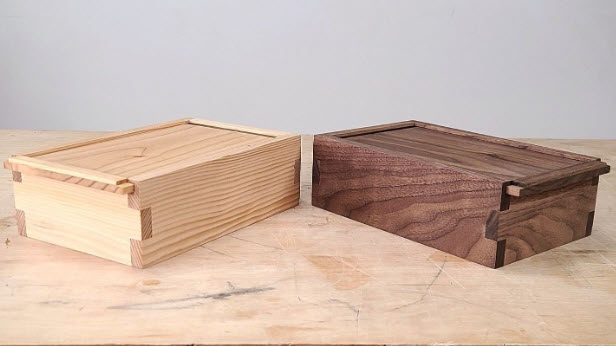
A basic wooden box is arguably the single best starter project and one of the easiest woodworking projects for beginners.
Why It’s Perfect for Beginners:
- Teaches measuring, cutting, and assembly
- Uses only straight cuts
- Requires minimal materials
- Scalable to any size
- Useful for storage
Materials Needed:
- 1×6 pine board (6 feet) – $8-$12
- Wood glue – $5
- Sandpaper – $3
- Optional: stain or paint – $8-$15
Total cost: $16-$30
Basic Steps:
- Cut pieces: Four sides and one bottom piece
- Sand all pieces: Start with 120 grit, finish with 220 grit
- Apply glue: Thin, even coat on edges
- Assemble: Clamp pieces together, ensure square corners
- Let dry: 24 hours for full strength
- Finish: Sand smooth, apply stain or paint if desired
Time required: 2-3 hours (plus drying time)
Skills learned: Measuring, straight cuts, gluing, clamping, sanding, finishing
This project is among the easiest woodworking projects for beginners because mistakes are easily fixed and the simple design is very forgiving.
Project #2 — Wall-Mounted Shelf
A simple floating shelf teaches new skills while creating something immediately useful for your home.
Why It’s Beginner-Friendly:
- Only requires cutting boards to length
- Teaches mounting and leveling
- Highly practical and customizable
- Minimal material waste
Materials Needed:
- 1×8 pine board (desired length) – $10-$20
- L-brackets or shelf brackets – $8-$15
- Screws – $3-$5
- Sandpaper – $3
Total cost: $24-$43
Basic Steps:
- Cut board to length: Measure wall space, cut accordingly
- Sand thoroughly: Smooth all surfaces and edges
- Find studs: Use stud finder or knock test
- Mark bracket positions: Use level to ensure shelf will be straight
- Install brackets: Secure to wall studs
- Attach shelf: Screw shelf to brackets from underneath
- Finish: Apply stain, paint, or leave natural
Time required: 2-3 hours
Skills learned: Measuring, leveling, mounting, finishing
Wall shelves are among the easiest woodworking projects for beginners that produce professional-looking results with minimal effort.
Project #3 — Phone or Tablet Stand
This small project uses minimal materials and teaches precision cutting and sanding.
Why It’s Ideal for Beginners:
- Uses scrap wood or single small board
- Teaches angled cuts (optional)
- Quick completion builds confidence
- Makes great gifts
Materials Needed:
- 1×6 pine board (1 foot) – $3-$5
- Sandpaper – $3
- Wood glue – $5
- Optional: felt pads – $3
Total cost: $11-$16
Basic Steps:
- Cut base and back pieces: Simple rectangular cuts
- Sand all edges smooth: Round corners for comfort
- Cut groove for device: Use saw or router (optional)
- Glue pieces together: Clamp at appropriate angle
- Final sanding: Make surface smooth to touch
- Add felt pads: Protect furniture surfaces
Time required: 1-2 hours
Skills learned: Precision cutting, sanding, angled assembly
Phone stands are perfect easiest woodworking projects for beginners because they’re small, quick, and immediately useful.
Project #4 — Cutting Board
A simple cutting board teaches edge-gluing and creates a practical kitchen item.
Why Beginners Love This Project:
- Teaches gluing techniques
- Creates useful kitchen tool
- Makes excellent gifts
- Simple rectangular design
Materials Needed:
- Hardwood boards (maple, walnut, or cherry) – $15-$25
- Wood glue – $5
- Mineral oil (food-safe finish) – $8
- Sandpaper – $3
Total cost: $31-$41
Basic Steps:
- Cut boards to length: All pieces same length
- Arrange grain pattern: Alternate grain direction for stability
- Apply glue: Thin coat on edges
- Clamp tightly: Use multiple clamps for even pressure
- Let dry 24 hours: Don’t rush this step
- Sand smooth: Progress through grits to 220
- Apply mineral oil: Food-safe finish, multiple coats
Time required: 3-4 hours (plus drying time)
Skills learned: Edge-gluing, clamping, food-safe finishing
Cutting boards are among the easiest woodworking projects for beginners that produce professional-quality results.
Project #5 — Tool Holder or Organizer
Building storage for your growing tool collection is both practical and educational.
Why It’s Great for Learning:
- Customizable to your needs
- Teaches planning and layout
- Uses basic joinery
- Solves real workshop problem
Materials Needed:
- 1×6 pine boards (8 feet total) – $12-$18
- Wood screws – $5
- Wood glue – $5
- Sandpaper – $3
Total cost: $25-$31
Basic Steps:
- Plan layout: Measure tools, design holder accordingly
- Cut all pieces: Back panel, shelves, dividers
- Sand components: Smooth before assembly
- Assemble frame: Glue and screw together
- Add dividers: Create compartments for different tools
- Mount to wall: Secure to studs for stability
- Finish: Paint or stain as desired
Time required: 3-4 hours
Skills learned: Project planning, assembly, mounting
Tool holders are practical easiest woodworking projects for beginners that grow more useful as your toolkit expands.
Project #6 — Picture Frame
Simple picture frames teach precision and finishing while creating personalized decor.
Why Beginners Should Try This:
- Teaches miter cuts (45-degree angles)
- Small scale reduces material waste
- Customizable to any photo size
- Great gift project
Materials Needed:
- 1×2 pine or poplar (4 feet) – $5-$8
- Wood glue – $5
- Glass or acrylic sheet – $5-$10
- Backing board – $3
- Sandpaper – $3
Total cost: $21-$29
Basic Steps:
- Measure photo: Add border width to determine frame size
- Cut mitered corners: 45-degree angles on all four pieces
- Sand pieces: Smooth all surfaces
- Glue corners: Use corner clamps or tape
- Let dry completely: 24 hours minimum
- Add backing: Secure glass, photo, and backing board
- Finish frame: Stain or paint as desired
Time required: 2-3 hours (plus drying time)
Skills learned: Miter cuts, corner joinery, precision assembly
Picture frames are rewarding easiest woodworking projects for beginners that teach advanced techniques in a manageable format.
Project #7 — Small Storage Crate
Wooden crates combine box-building skills with handle installation for a versatile storage solution.
Why It’s Beginner-Appropriate:
- Builds on box construction skills
- Teaches handle installation
- Highly functional
- Scalable design
Materials Needed:
- 1×6 pine boards (10 feet) – $15-$20
- 1×2 pine for handles (2 feet) – $3-$5
- Wood screws – $5
- Wood glue – $5
- Sandpaper – $3
Total cost: $31-$38
Basic Steps:
- Cut all pieces: Sides, bottom, handle supports
- Sand components: Smooth before assembly
- Assemble box: Glue and screw sides together
- Attach bottom: Secure with screws from outside
- Install handles: Cut hand-holds or attach rope
- Final sanding: Round all edges for comfort
- Finish: Stain, paint, or leave natural
Time required: 3-5 hours
Skills learned: Box construction, handle installation, reinforced joinery
Storage crates are versatile easiest woodworking projects for beginners that you’ll use for years.
Tips for Success on Your First Projects
Following these guidelines ensures your first easiest woodworking projects for beginners turn out well:
Before You Start:
Read instructions completely: Understand entire process before cutting Gather all materials: Having everything ready prevents mid-project stops Prepare workspace: Clear, well-lit area with stable work surface Check tool sharpness: Dull tools are dangerous and produce poor results
During the Project:
Measure twice, cut once: Verify every measurement before cutting Work slowly: Control beats speed every time Sand thoroughly: Proper sanding transforms amateur work into professional results Test on scrap: Practice unfamiliar cuts before using project wood Use clamps liberally: You can never have too many clamps
After Completion:
Let glue dry fully: Don’t rush the curing process Apply finish properly: Multiple thin coats beat one thick coat Learn from mistakes: Every error teaches valuable lessons Take photos: Document progress to see improvement over time
Common Beginner Questions
How long do beginner projects take?
Most easiest woodworking projects for beginners take 2-4 hours of active work time, plus drying time for glue and finishes. Your first project will take longer as you learn techniques, but subsequent builds go much faster.
What if I make a mistake?
Mistakes are normal and expected. Most errors in beginner projects can be fixed with extra sanding, wood filler, or creative adjustments. The easiest woodworking projects for beginners are forgiving by design.
Do I need a workshop?
No. Many beginners complete these projects on kitchen tables, in garages, or on apartment balconies. The easiest woodworking projects for beginners require minimal space and can be done almost anywhere.
Should I use plans or wing it?
For your first 3-5 projects, follow detailed plans or tutorials. Once you understand basic techniques, you can start modifying designs or creating your own. The easiest woodworking projects for beginners have plenty of free plans available online.
Progression Path for Beginners
Start with these easiest woodworking projects for beginners in this recommended order:
Projects 1-3 (First Month):
- Simple wooden box
- Phone stand
- Wall shelf
Projects 4-6 (Months 2-3): 4. Tool holder 5. Cutting board 6. Picture frame
Projects 7-10 (Months 4-6): 7. Storage crate 8. Small side table 9. Bookshelf 10. Simple bench
This progression builds skills systematically, with each project introducing new techniques while reinforcing previous lessons.
FAQ
What are the easiest woodworking projects for absolute beginners?
Simple wooden boxes, phone stands, and wall shelves are the absolute easiest woodworking projects for beginners. They require minimal tools, use basic straight cuts, and teach fundamental skills while producing useful items. Most beginners can complete these projects in 2-3 hours with materials costing $10-$30.
How much do beginner woodworking projects cost?
Most easiest woodworking projects for beginners cost $10-$40 in materials. Simple boxes and phone stands use $10-$20 in pine, while cutting boards and picture frames cost $20-$40 due to better wood or additional materials like glass. Tool costs are separate but a basic starter kit runs $80-$150.
Can I build woodworking projects without power tools?
Yes, absolutely. All the easiest woodworking projects for beginners can be completed with hand tools only. A handsaw, drill (even manual), sandpaper, and clamps are sufficient. Hand tools are actually better for learning because they teach proper technique and control.
What wood is best for beginner projects?
Pine is the best wood for beginner projects. It’s affordable ($3-$8 per board foot), soft enough to cut easily with hand tools, widely available, and forgiving of mistakes. Poplar is another excellent choice for painted projects. Avoid expensive hardwoods like walnut or oak until you’ve completed several projects.
How do I know if a project is too advanced?
If a project requires tools you don’t own, techniques you haven’t practiced, or complex joinery, it’s probably too advanced. The easiest woodworking projects for beginners use straight cuts, simple assembly, and basic tools. Start simple and progress gradually—attempting advanced projects too early leads to frustration and wasted materials.
Final Verdict
The easiest woodworking projects for beginners are simple, affordable, and achievable builds that teach fundamental skills while producing useful items. Starting with projects like wooden boxes, shelves, phone stands, and cutting boards builds your confidence and capabilities without overwhelming you with complexity or cost.
The key to success is starting simple and progressing gradually. Each completed project teaches techniques you’ll use in more advanced builds later. Don’t rush to complex furniture—master the basics first through these beginner-friendly projects.
Remember that every expert woodworker started exactly where you are now. The difference is they took that first step and built their first simple project. Choose one of these easiest woodworking projects for beginners, gather your materials, and start building today. Your woodworking journey begins with a single cut.
What To Read Next
Continue your woodworking journey with these helpful guides:
- Beginner woodworking mistakes and how to avoid them – Learn from common errors
- Cheapest way to start woodworking – Budget-friendly strategies for beginners
- Essential beginner woodworking tools – What to buy first and what to skip
- Hand tools vs power tools for beginners – Choose the right tools for your situation
- Simple woodworking techniques every beginner should know – Master fundamental skills
Each guide helps you build stronger skills and confidence as you progress from beginner to intermediate woodworker.